Špela Petrič
Eating Back is a project by artist Špela Petrič that examines the high-tech cultivation of tomatoes and cucumbers in order to explore how algorithmic infrastructures shape our bodies.
Petrič uses the term ‘awkward intimacy’ to describe the relationships that arise between bodies and infrastructures as a result of consuming industrially produced food – a form of intimacy based on long-standing dependence on systems whose inner workings usually remain hidden, rather than on emotions or consent.
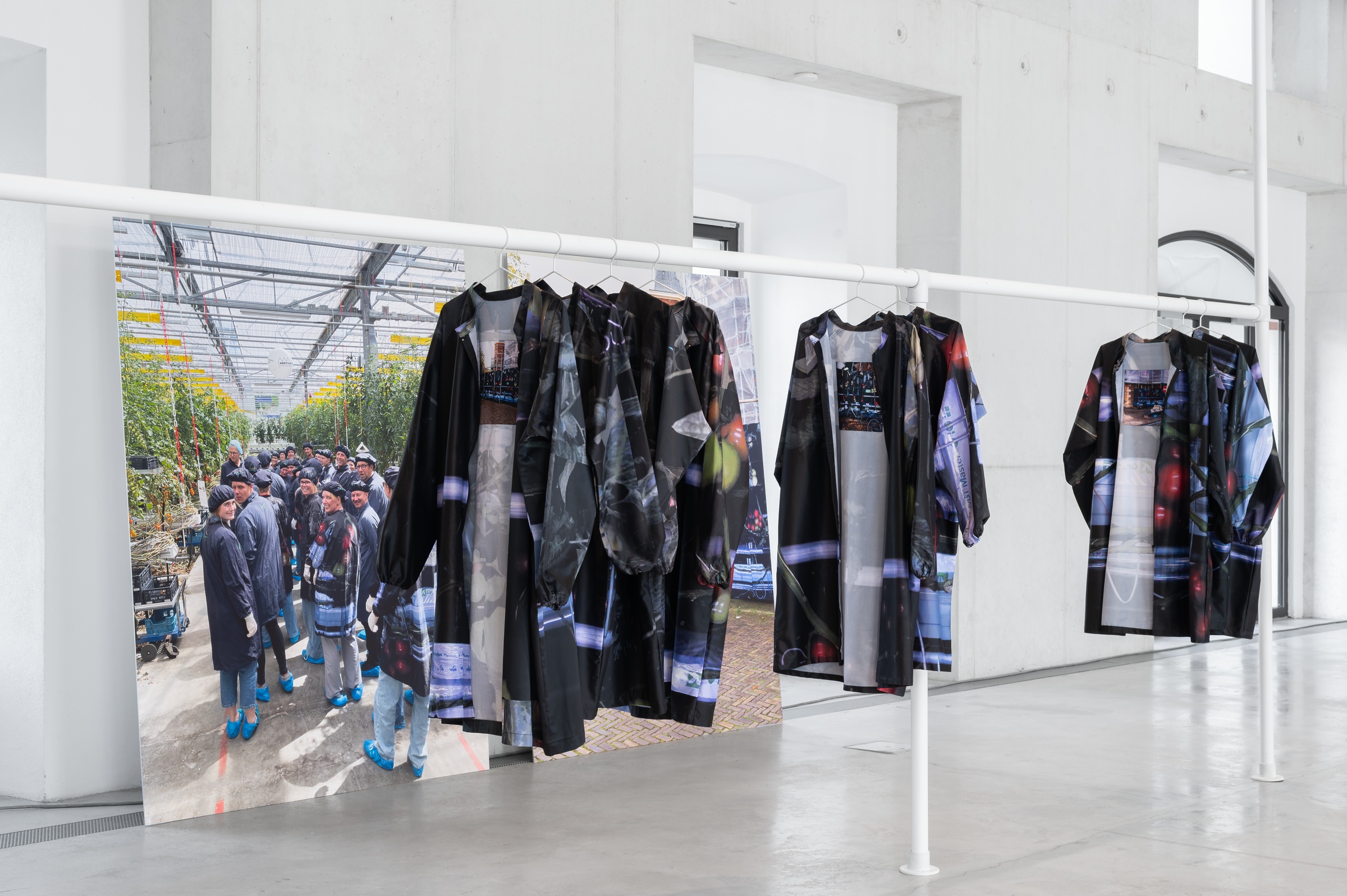
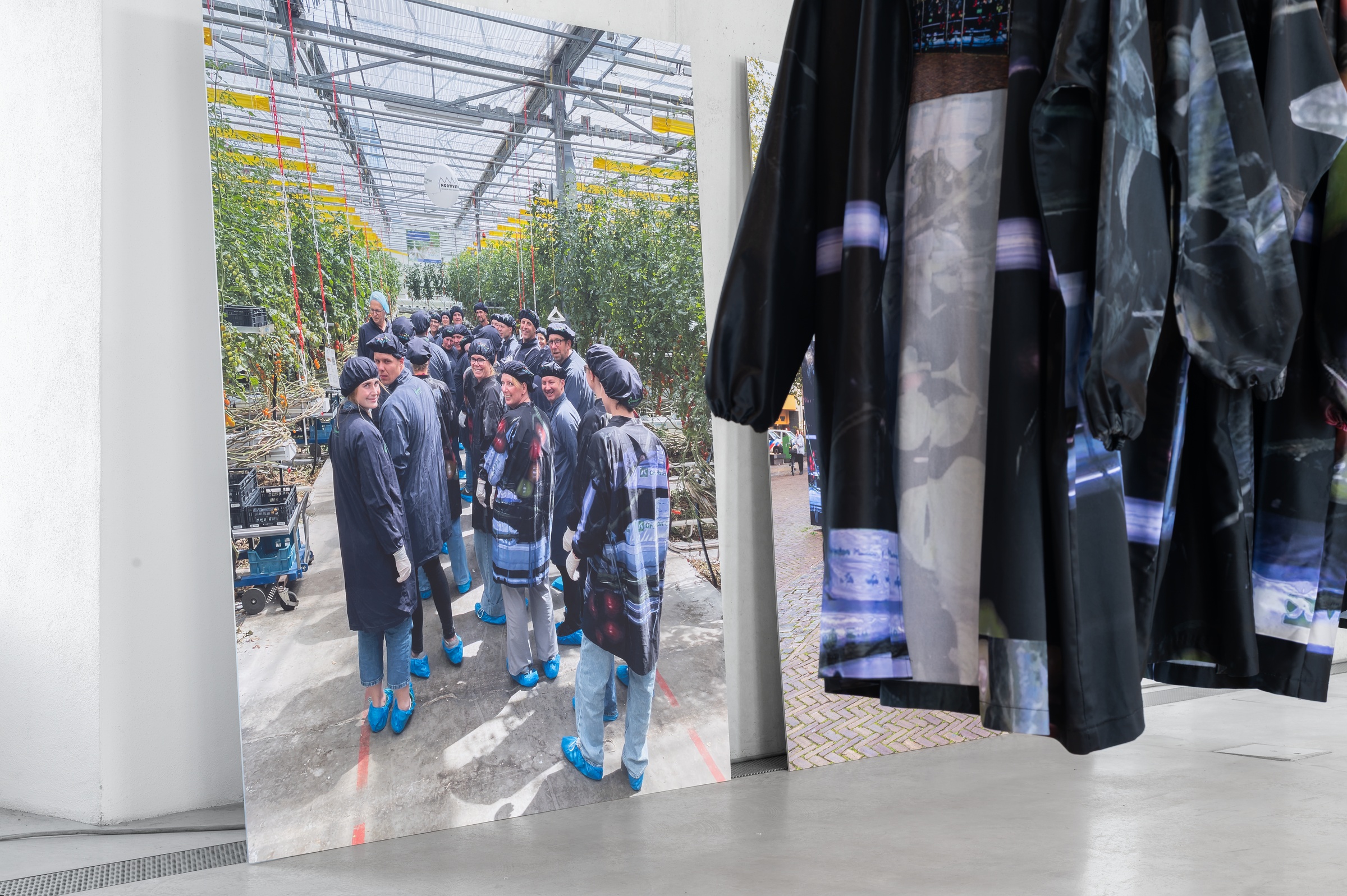
For this exhibition, Petrič draws on a series of performative interventions that she conducted in the greenhouses of Westland, a municipality in the Netherlands. Her choice of location was driven by the fact that the principles underlying the design of the modern industrial greenhouse, which have been adopted across much of Europe in the name of ‘agricultural progress’, originated in that country. Greenhouses of this kind are highly specialised, enclosed environments that involve comprehensive data collection about both living and non-living actants, allowing for the rapid introduction of digitalisation and automation.
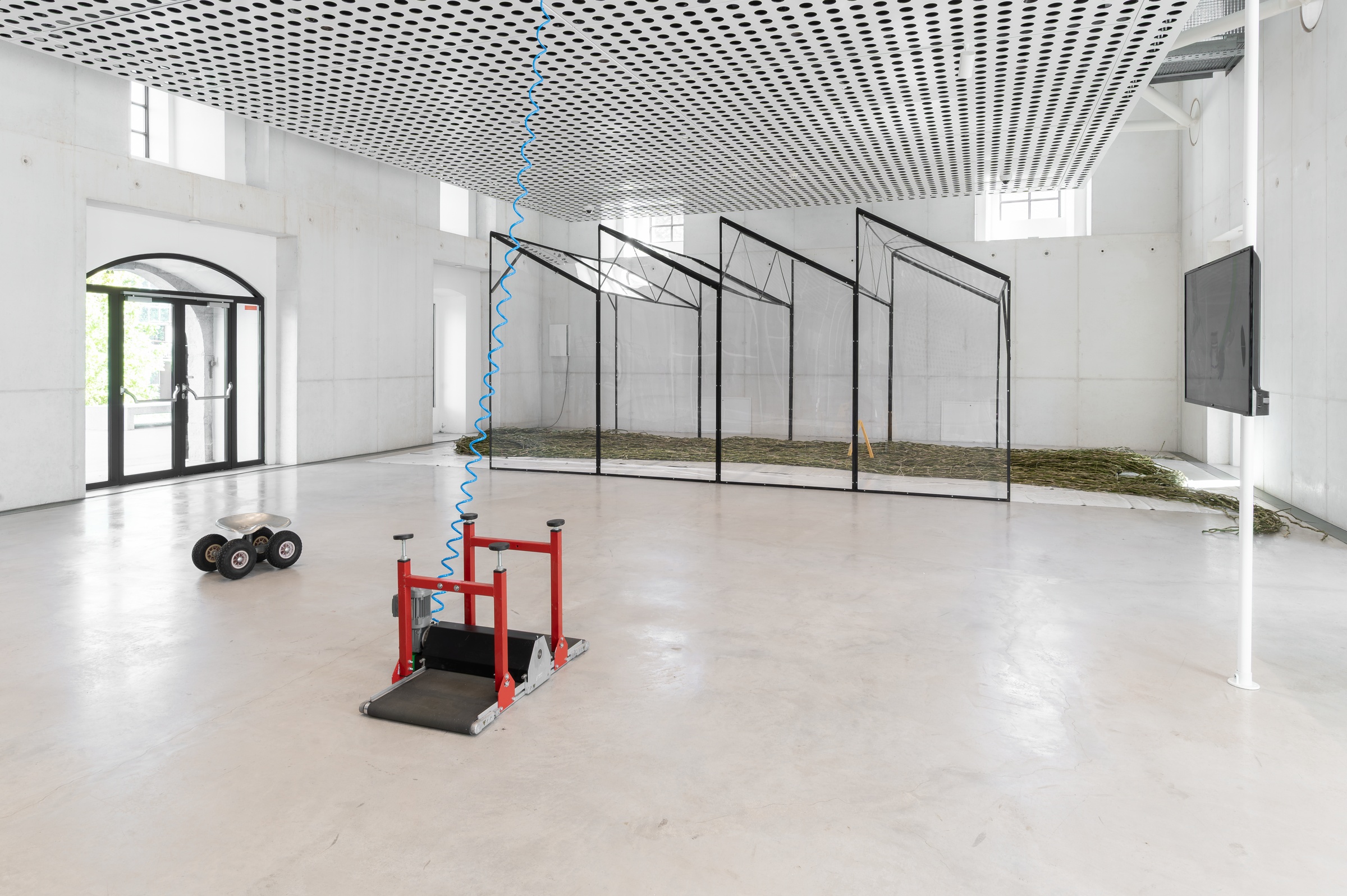
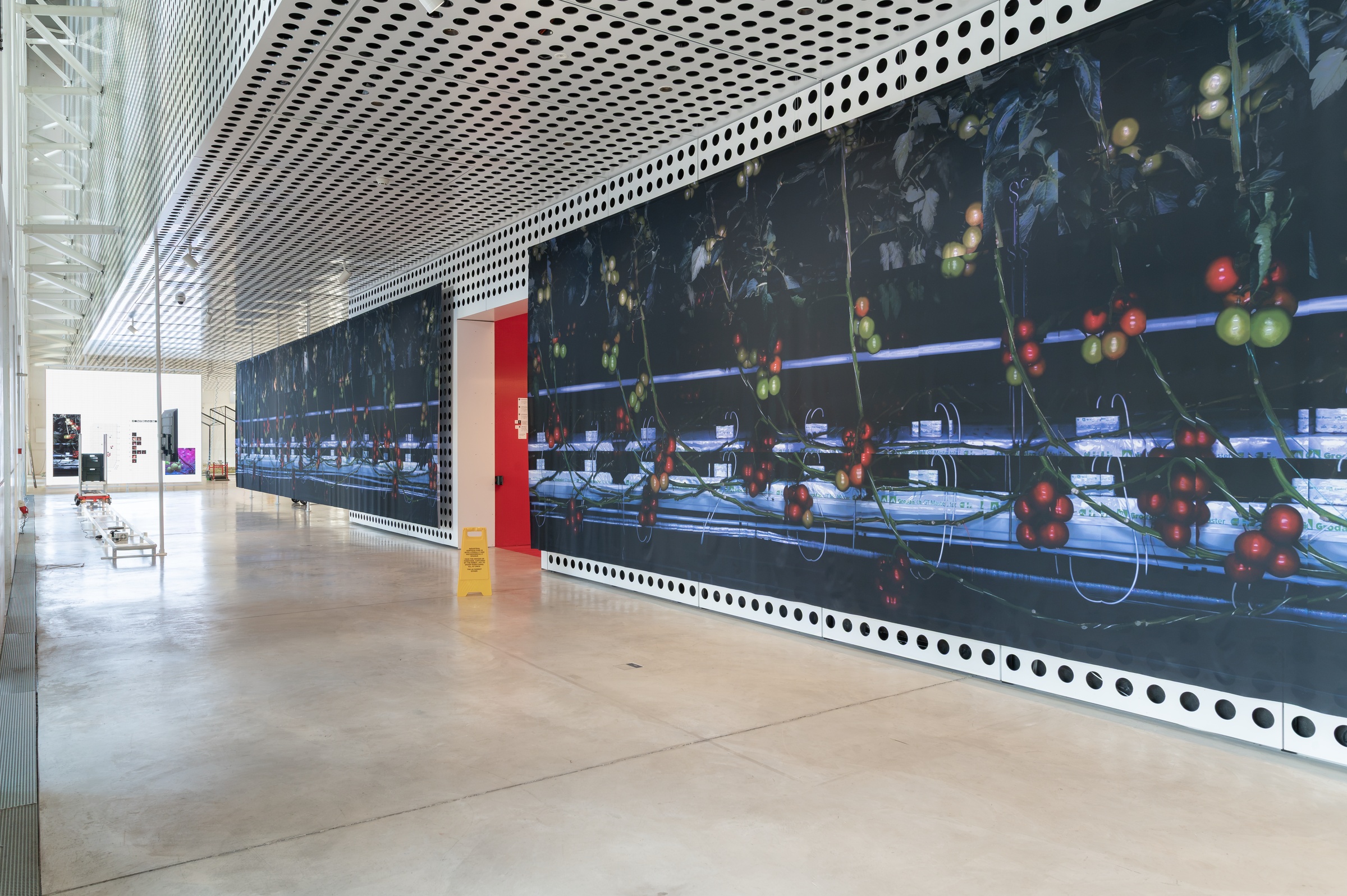
The exhibition has been conceived as a series of protocols or exercises that confront the visitor with the invisible and overlooked aspects of vegetable production. Visitors are met with images of tomatoes taken by a robotic system for the purposes of assessing ripeness and predicting yield. They hear a song of resistance about migrant workers that has been adapted from a traditional Polish song. The song played on the local radio contaminates the soundscape of the greenhouses, where large numbers of seasonal workers from Eastern Europe are employed.
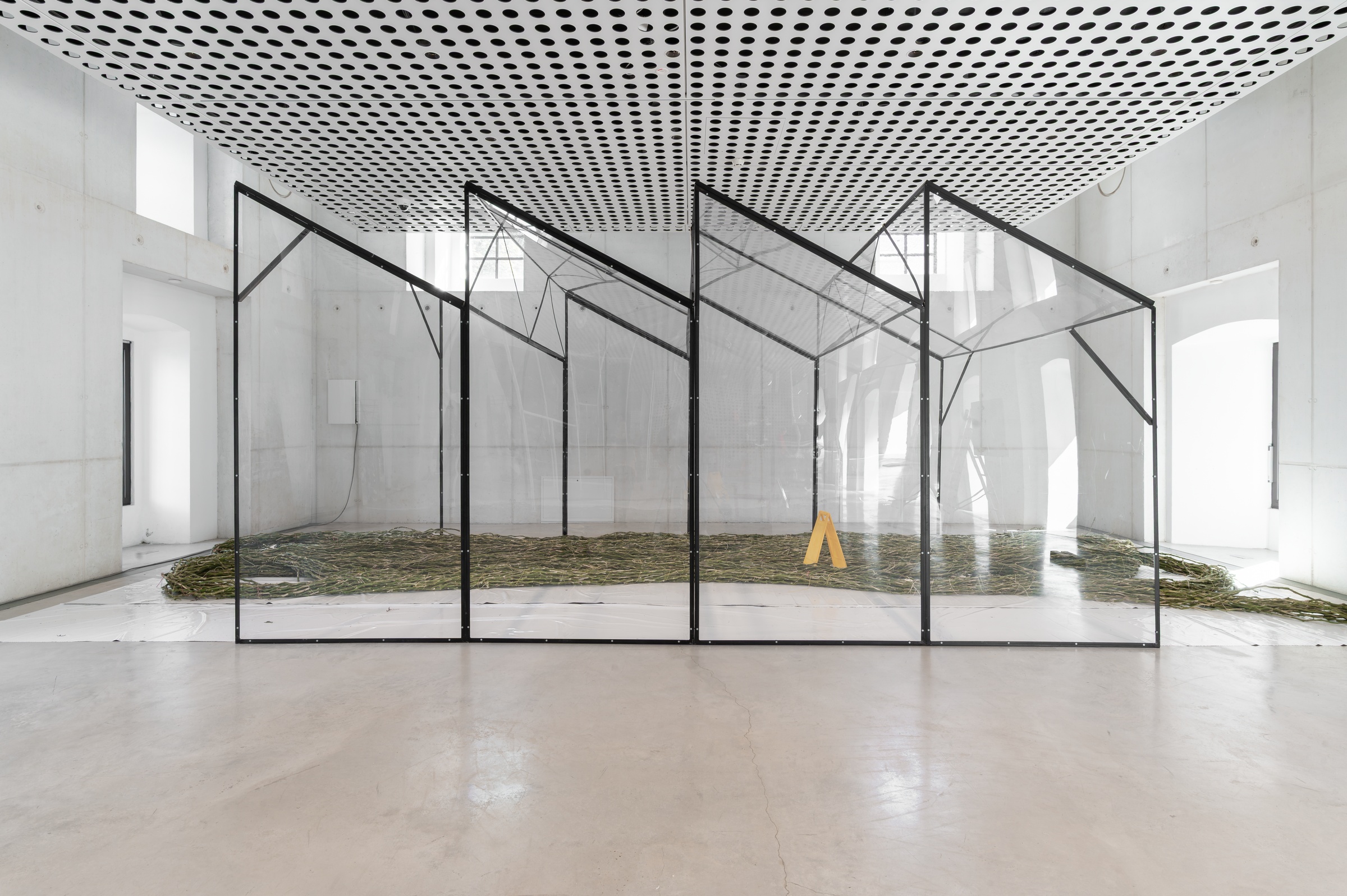
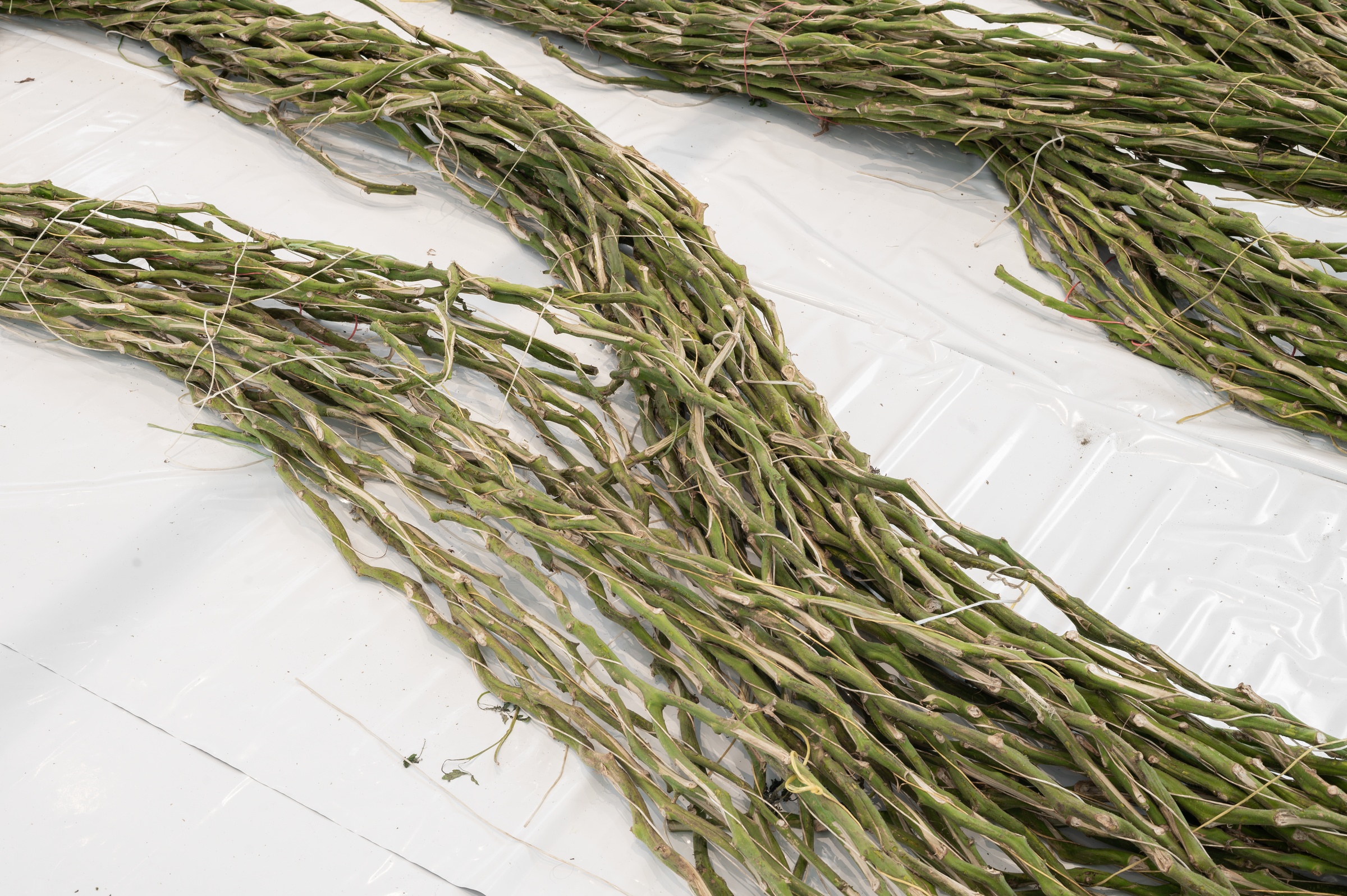
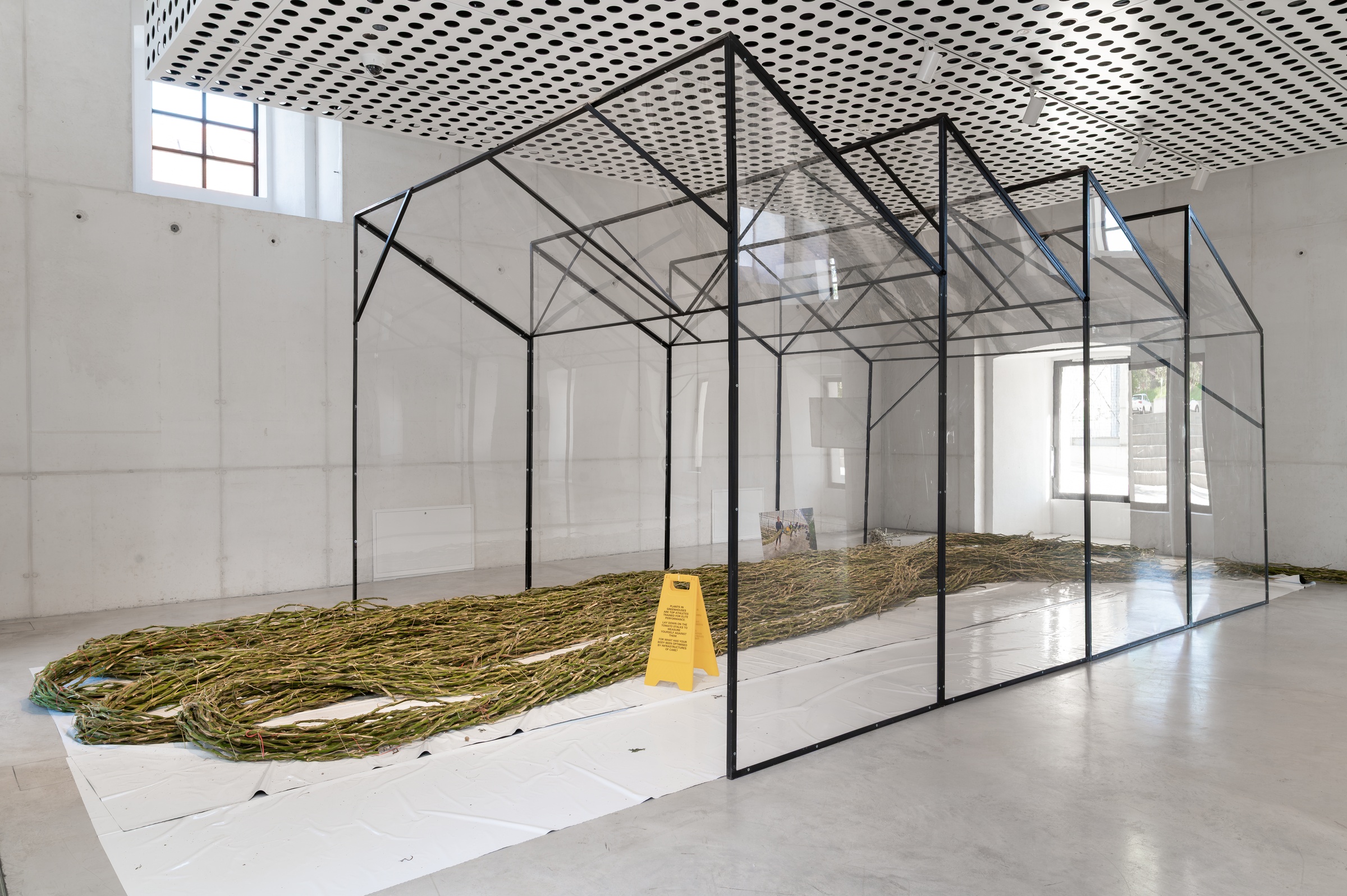
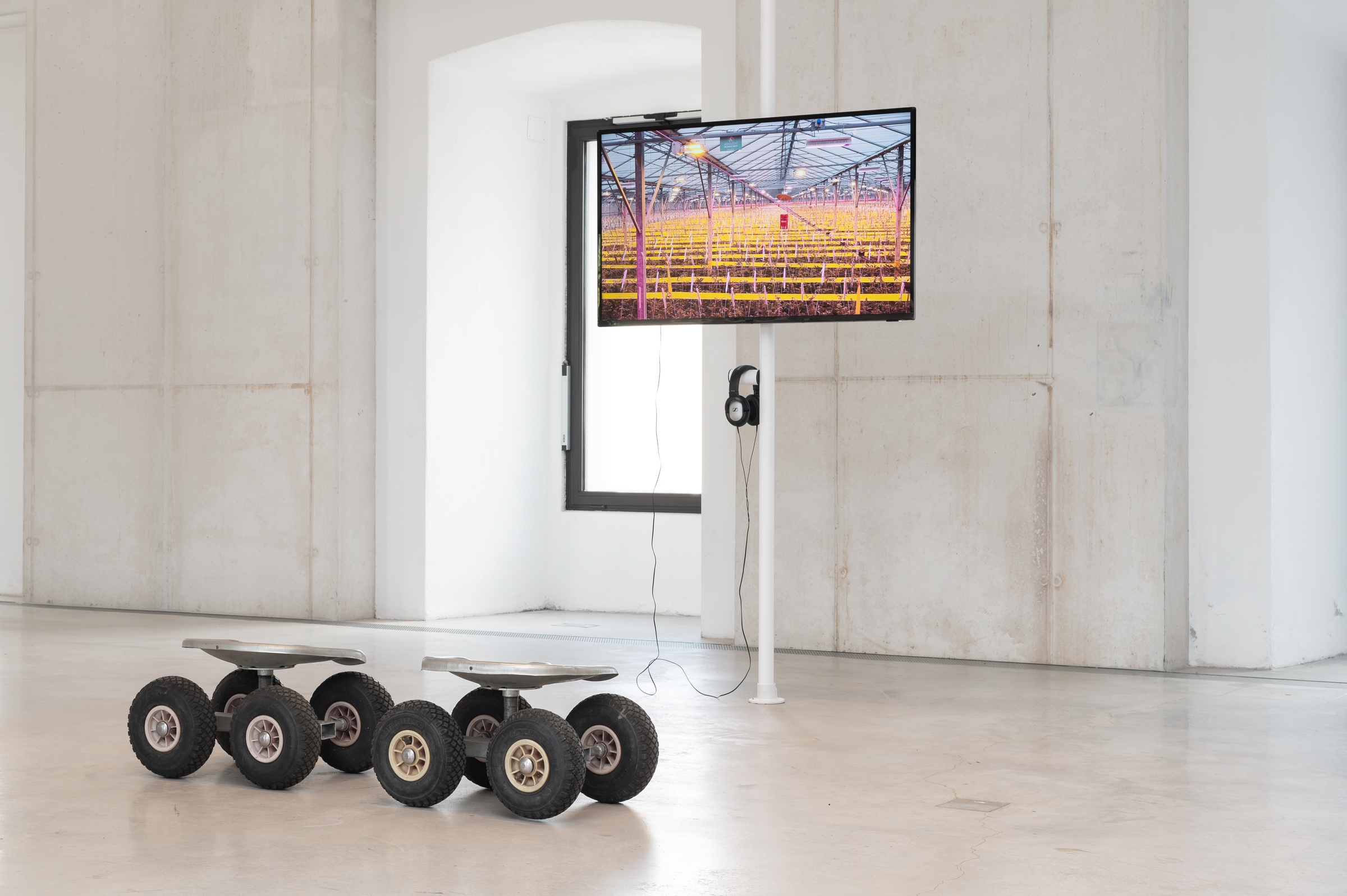
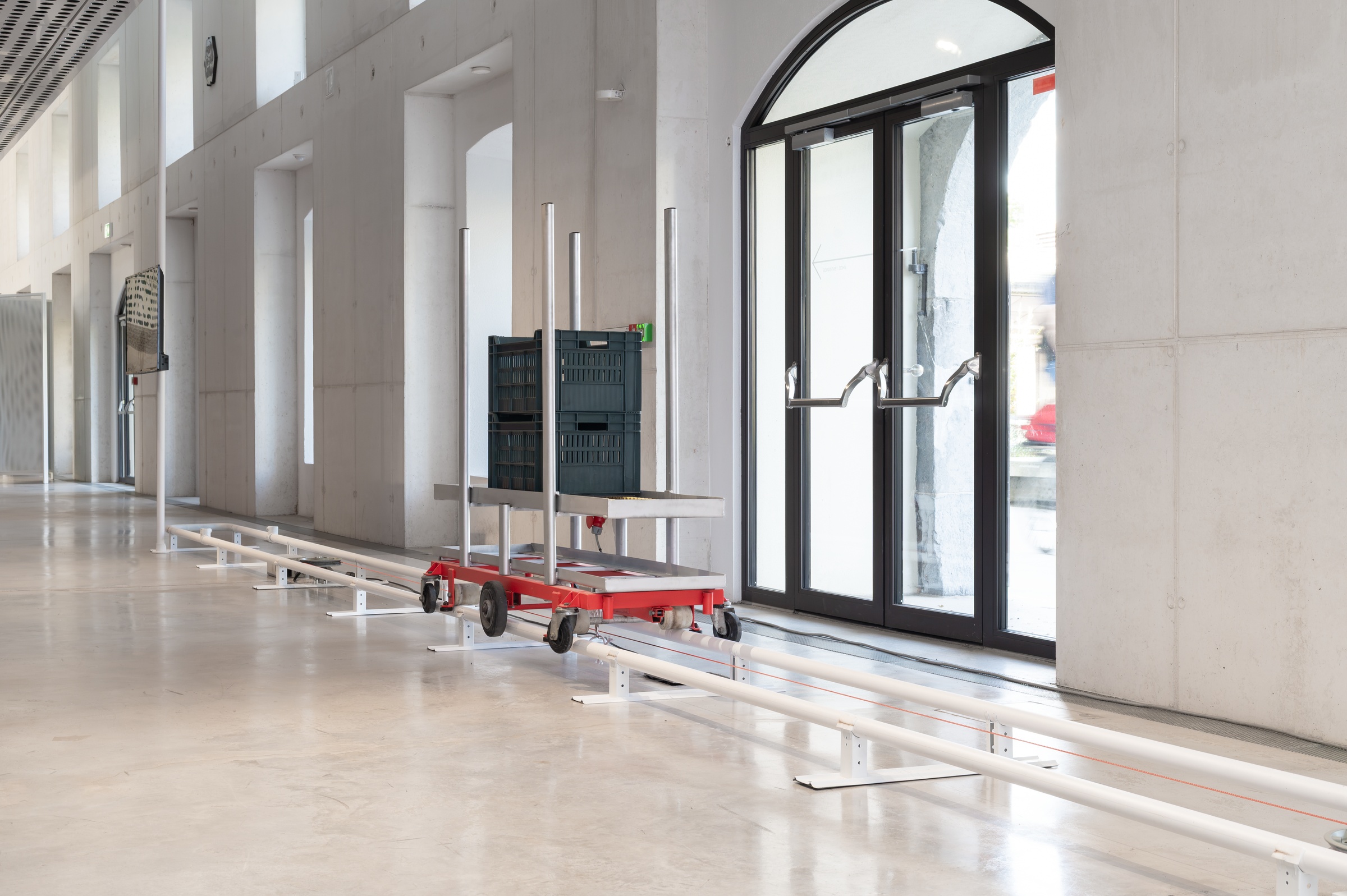
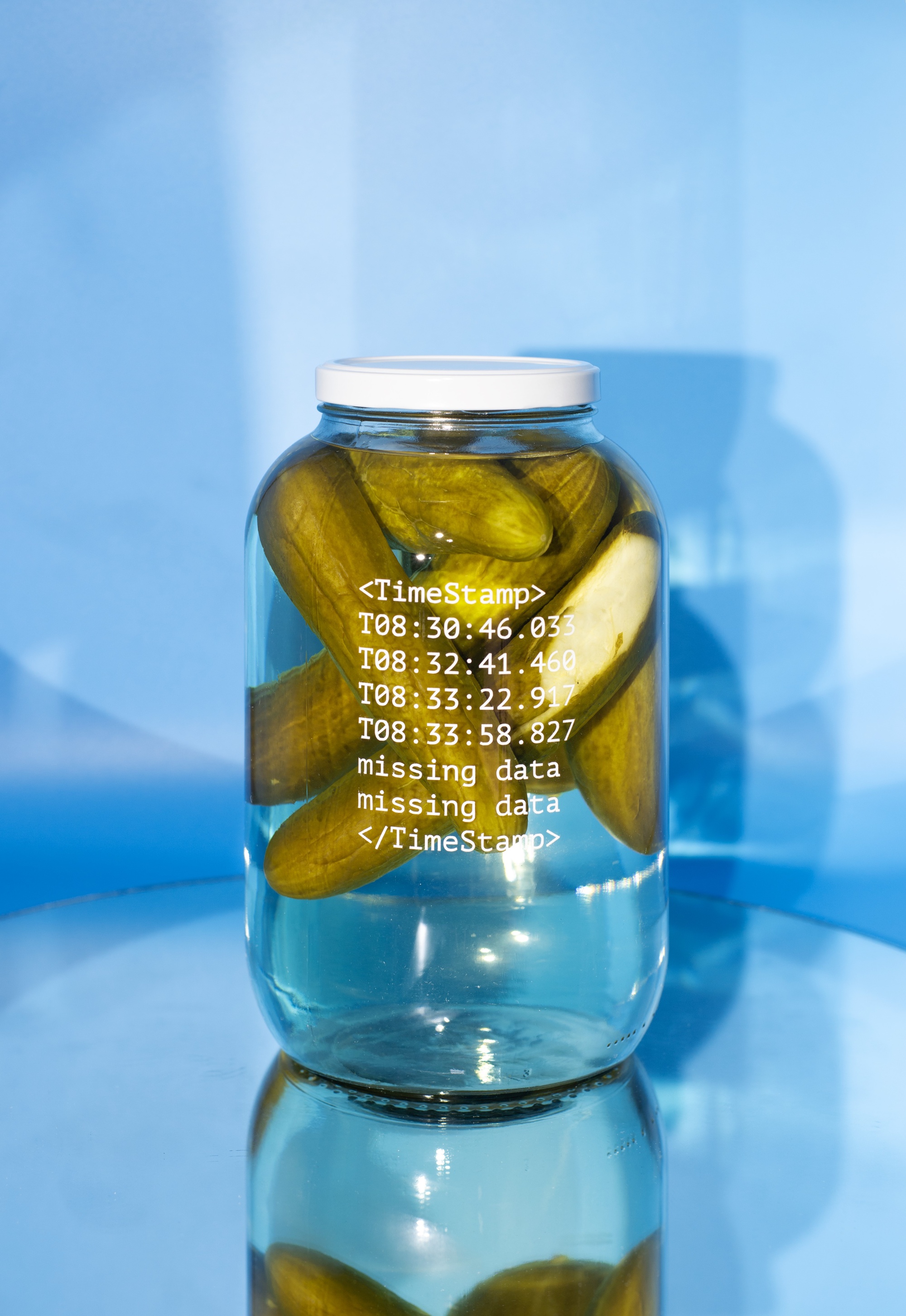
Also on display are the results of an intervention in which Petrič worked as a volunteer on a packing line, collecting the cucumbers that had been rejected by the machine vision sorting system and then pickling them. The result is 48 jars of pickled cucumbers and a photobook documenting their profiling along with the reasons the algorithm had classified them as unfit for sale. Under the terms of her performative stewardship agreement, the artist then gifts the jars to decision-makers who shape business, politics and culture. Next to the jars is a conveyor belt that has been converted into a self-driving robot travelling through a seemingly endless landscape full of greenhouses. There are also numerous elements in the exhibition space that can be found in automated vegetable production facilities, including a rail trolley, as well as a greenhouse containing discarded 12-metre-long tomato plants. At the height of their productivity – itself the result of an automated and optimised system – their neatly packaged product was made available to consumers in the local supermarket.
Building on Petrič’s direct access to the industrial greenhouse and its technological apparatus, Eating Back succeeds in contaminating the system from within. Through a series of performative interventions that adopt the principles of the system while simultaneously exploiting its cracks to enter it, the project reveals that the asymmetry between the infrastructure and the bodies subjected to it is integral to the system itself. It does not stop there, however. Petrič invites visitors to continue this process, not just by becoming aware of these dependencies but also by ‘eating back’. By following the protocols presented in the gallery – whether in the supermarket or at home – they are invited to actively engage with the awkward intimacy that arises from these encounters. In this way, the project extends beyond the walls of Cukrarna and enters into everyday life, where it subverts the routines and seemingly banal intertwining of relationships that form the basis of contemporary life.
Curated by Alenka Trebušak
Eating Back, 2026 | Production assistance: Simon Gmajner | Exhibition design: Miha Turšič | Conceptual advice: Agnieszka Anna Wołodźko | Curated by: Alenka Trebušak | Curatorial advice: Adrijan Praznik | Execution: Fabrikaid d.o.o. | Exhibition Technical Lead: Jože Kalan | Technical assistance: Valter Udovičić, Projekt Atol | Exhibition production and coordination: Janja Buzečan | Graphic Design: Ajdin Bašić | Public communication: Mojca Podlesek, Rea Vogrinčič | Educational and andragogical program: Nina Vošnjak | With special thanks to: Marko Peljhan | Produced by: Cukrarna Gallery/MGML | Co-produced by: Zavod 2^32 | Co-funded by: Mestna občina Ljubljana, Creative Industries Fund NL, Amsterdams Fonds voor de Kunst
Opening hours
Tuesday to Sunday: 10.00–19.00
24 and 31 December: 10.00–14.00
Closed: Mondays, 1 January, 1 November, 25 December
Tickets
Free entry
Press kit