Phil Collins
In the latest instalment in Cukrarna Gallery’s series of video exhibitions, we are presenting works by Phil Collins, bringing together three major films that span more than two decades of the artist’s practice. Internationally recognised for his deeply engaged and research-based approach to documentary, Collins has developed a body of work that operates fluently between moving image, music, performance, and political commentary.
At first glance, Collins’s works are not overtly critical; rather, they function as associative narratives that, through different layers of storytelling, communicate the complexity of their subjects. His projects often emerge from long-term collaborations with communities and individuals, examining how ideology, popular culture, labour, desire, and collective memory shape lived realities. Balancing intimacy with social critique, Collins consistently challenges the conventions of documentary representation, creating works that are emotionally charged, formally adventurous, and attentive to the poetics of everyday life.
Throughout, Collins places careful emphasis on the relationship between personal perspectives and broader historical contexts, frequently focusing on places marked by political transition or histories of oppression. Music plays a central role within his practice, functioning not simply as a background, but as a social structure through which communities can speak, gather, and imagine alternative forms of coexistence.
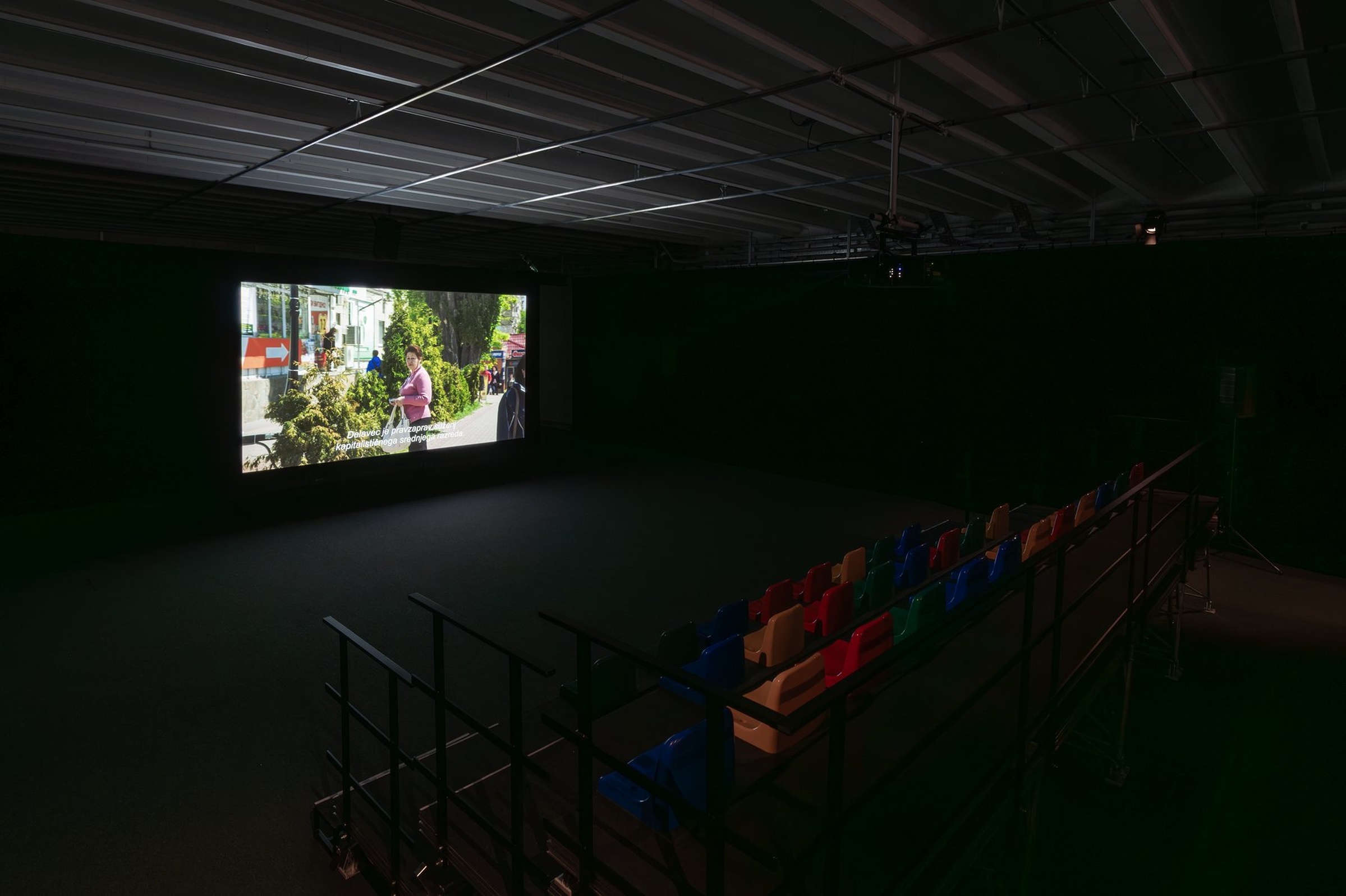
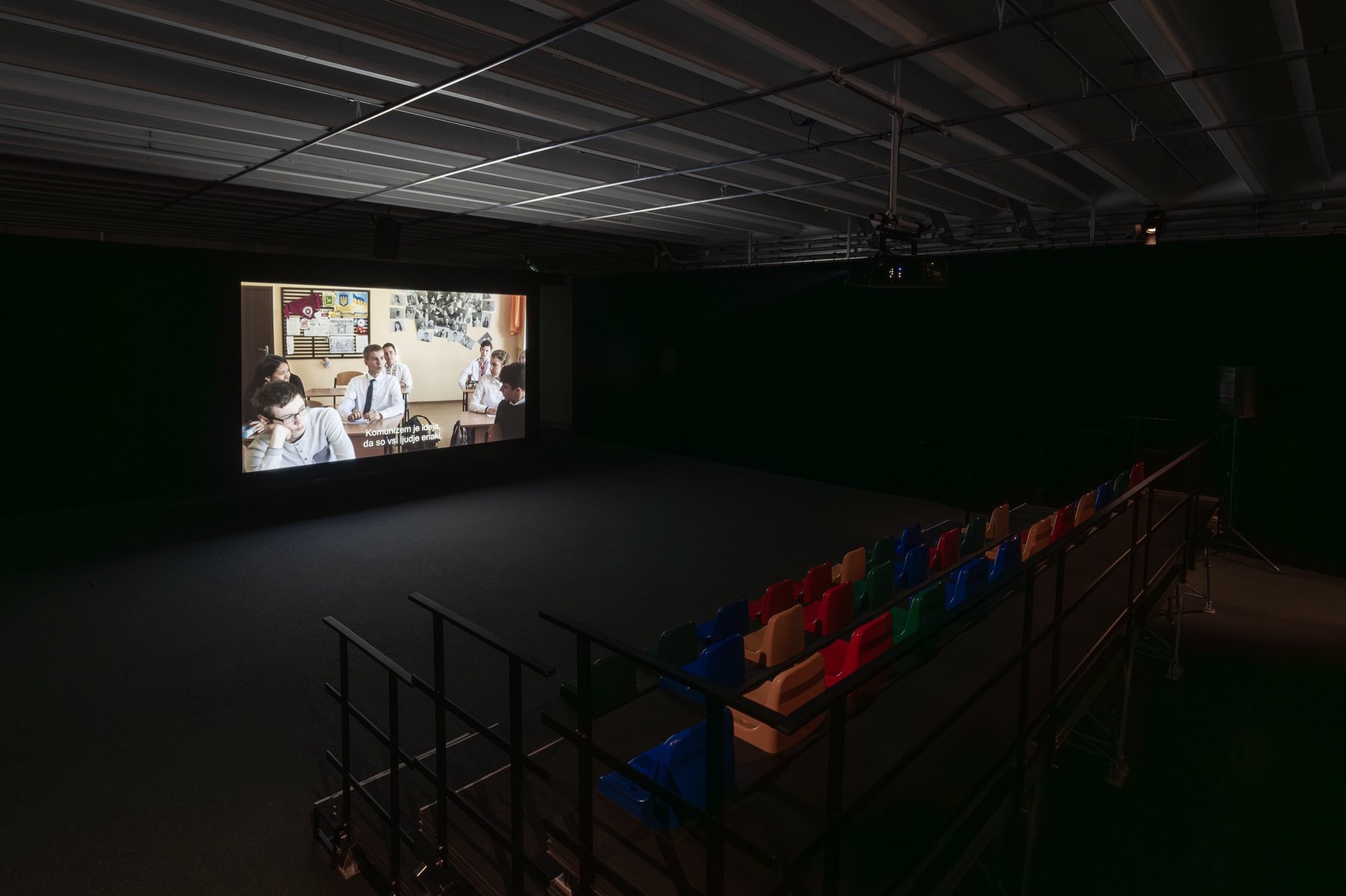
The programme at Cukrarna Gallery unfolds through a three-week screening loop that repeats for the duration of the exhibition, allowing each work to occupy the gallery space for one week before the cycle begins again. Together, the selected films offer a broad insight into Collins’s distinctive artistic language and his sustained interest in the intersections between politics, media culture, and collective experience.
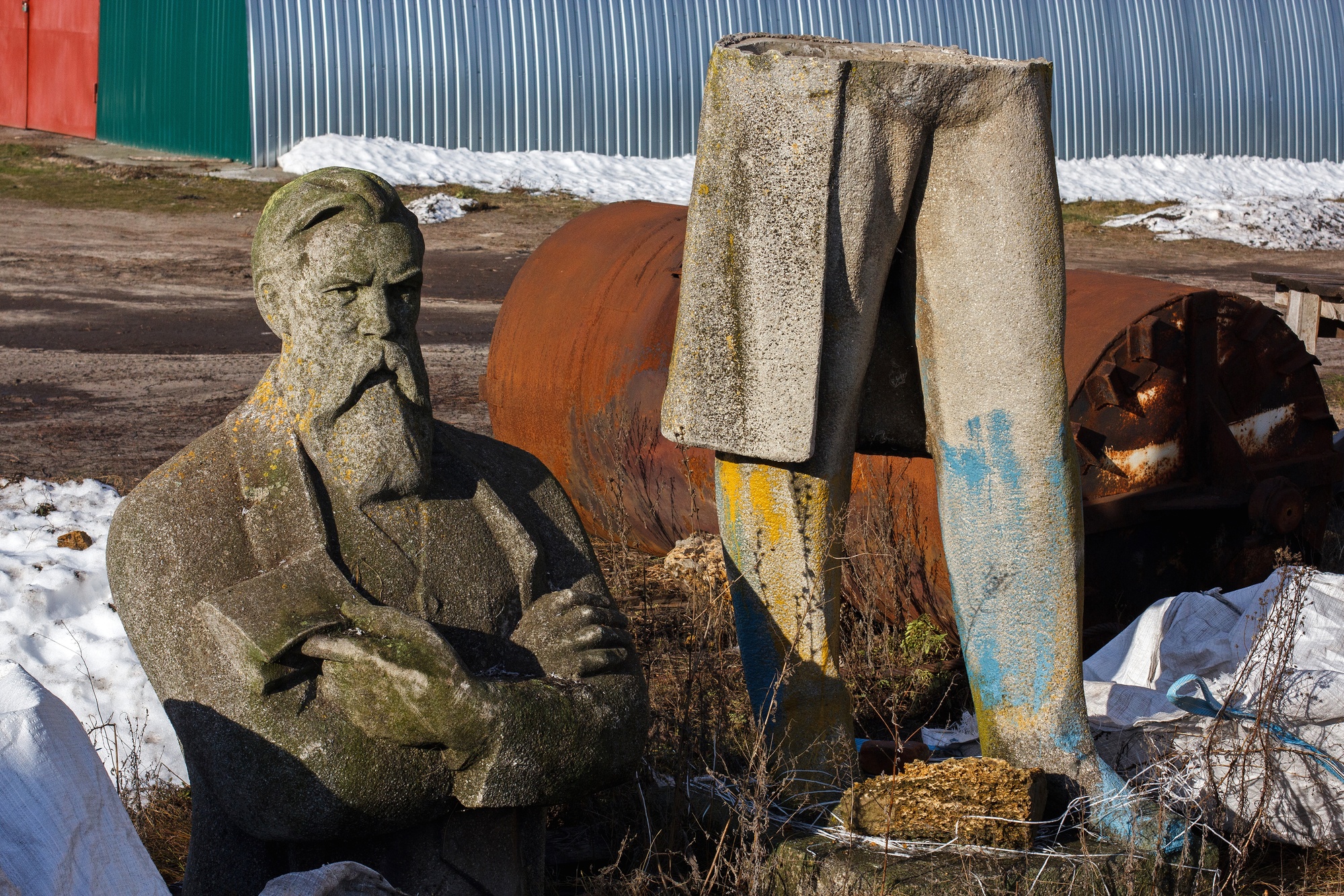
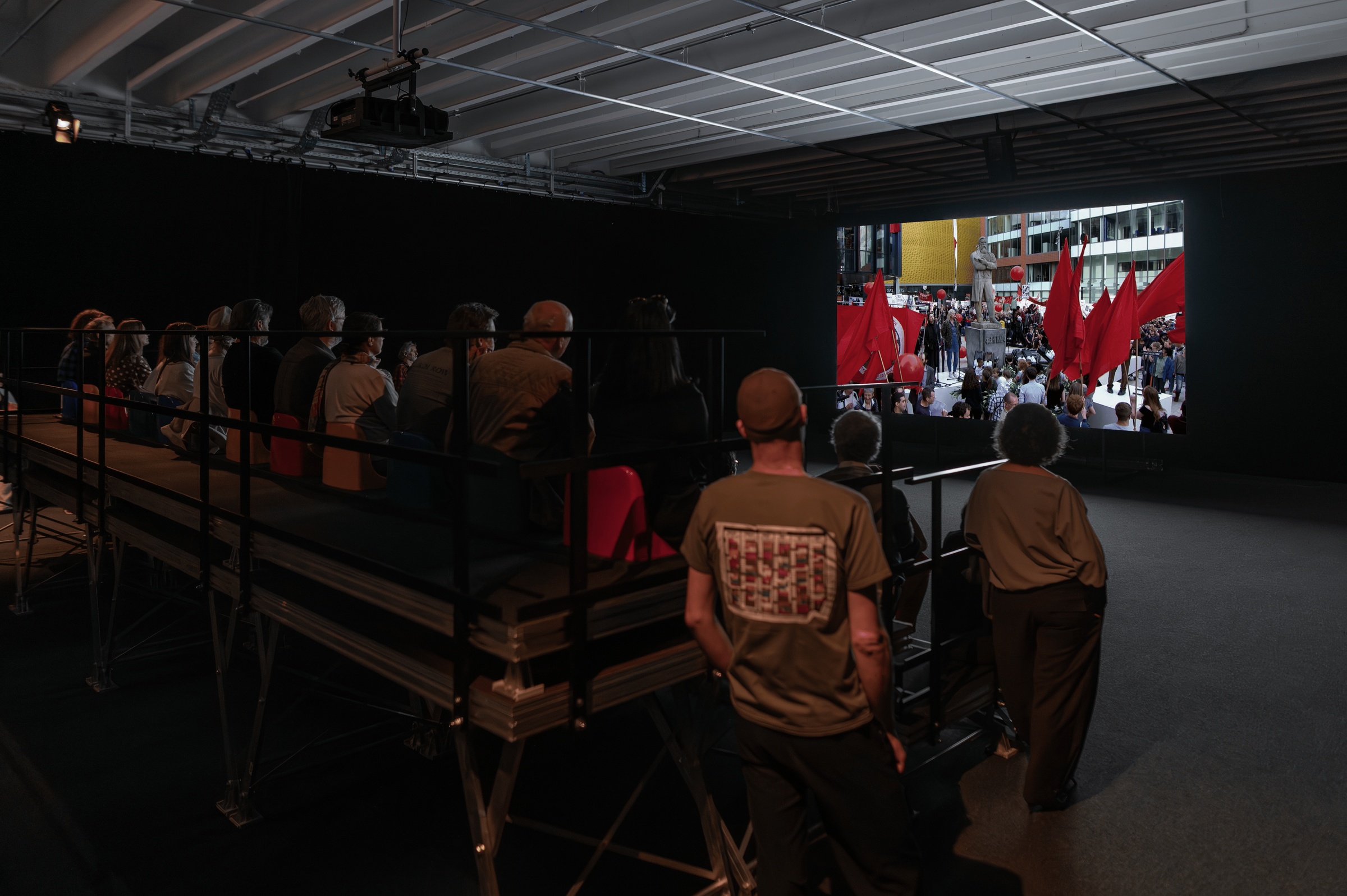
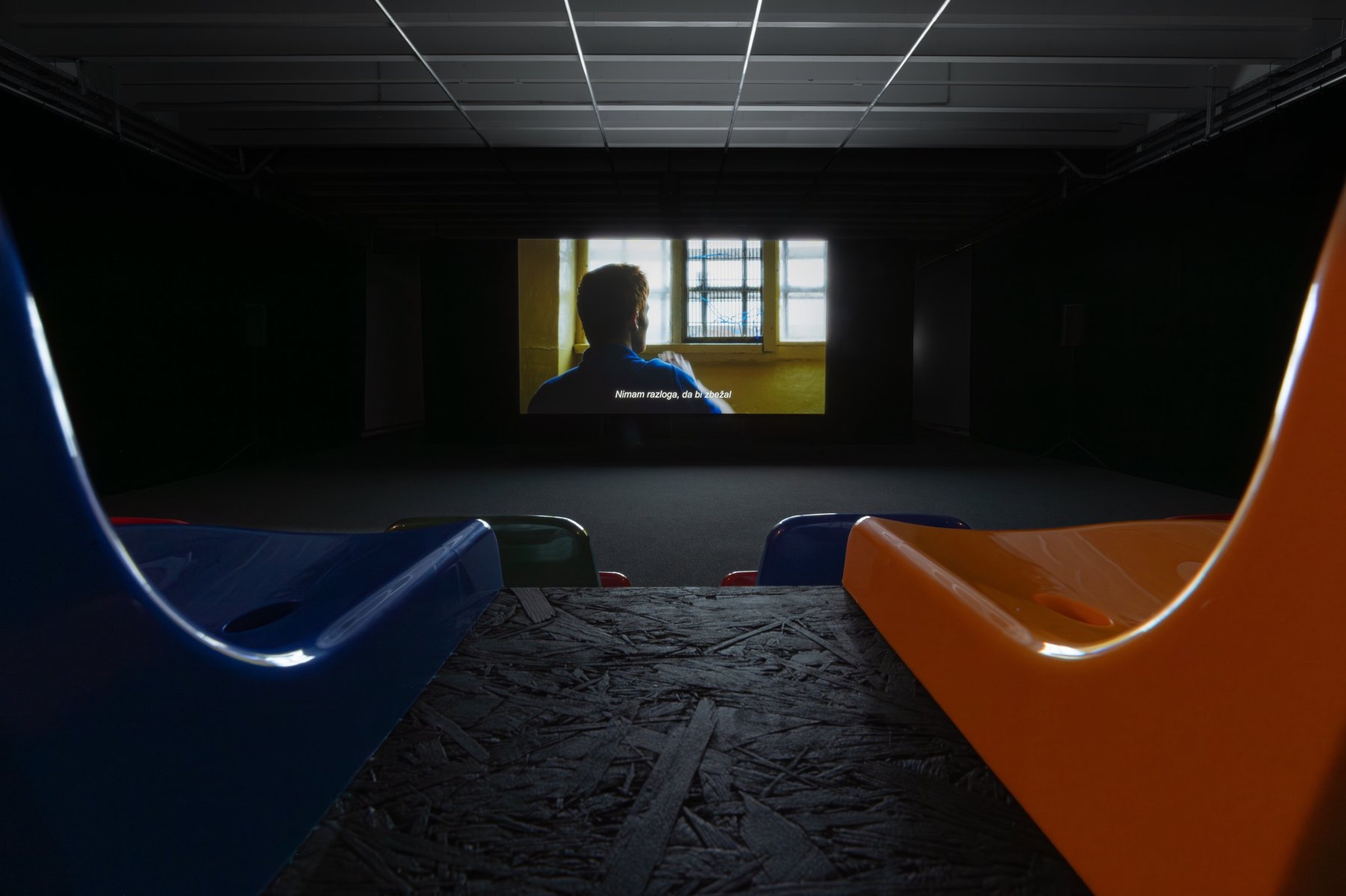
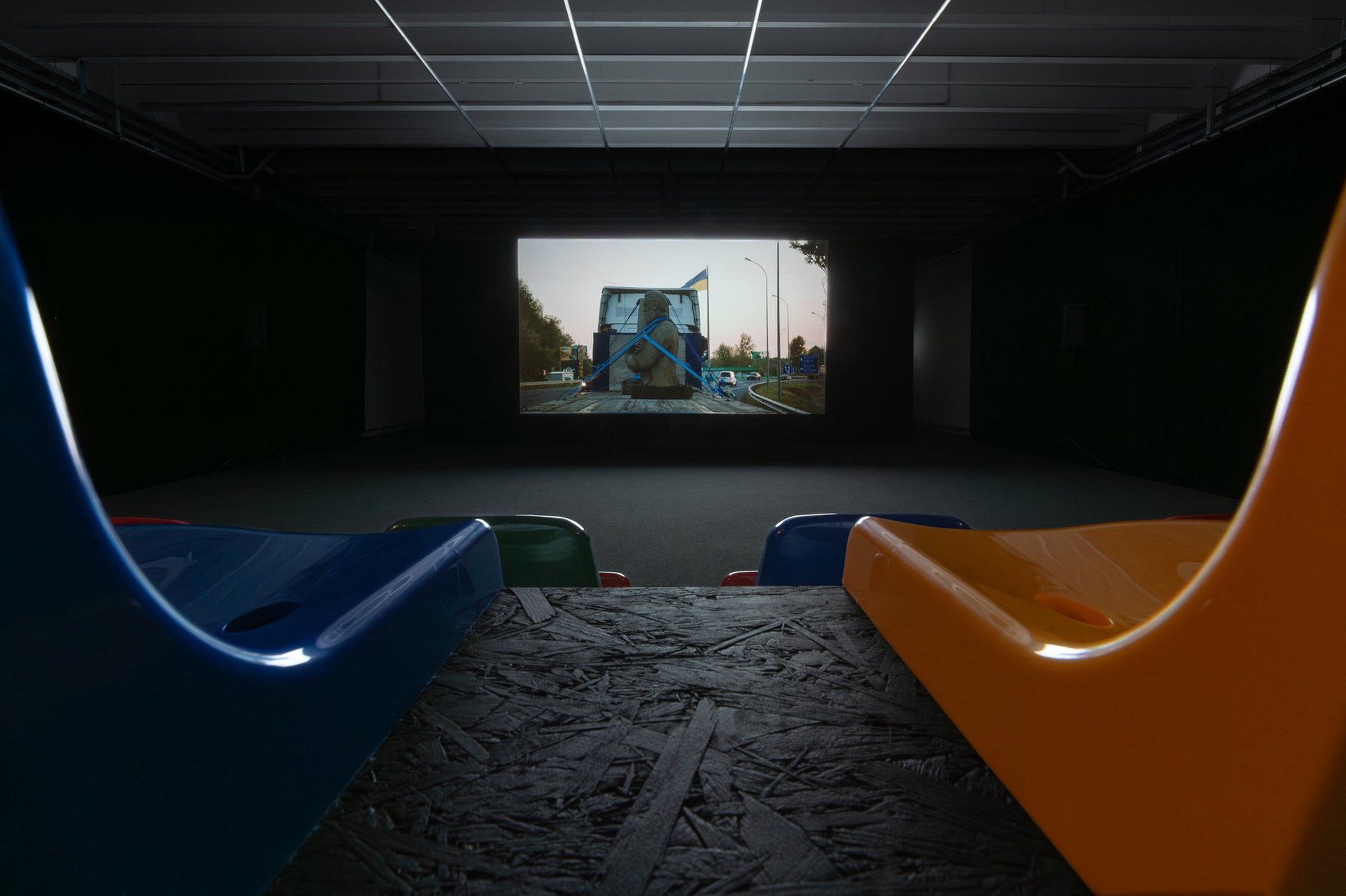
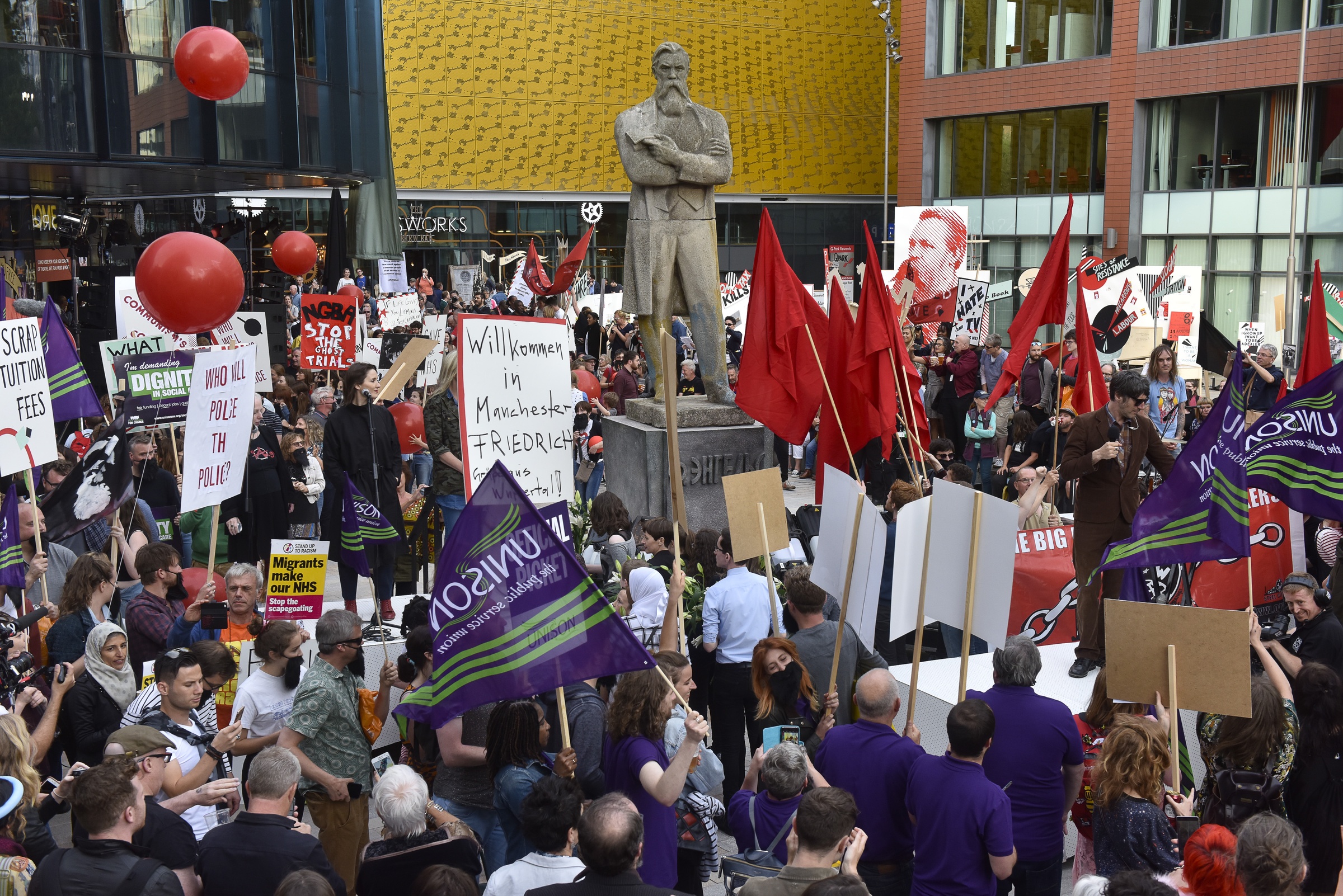
A century after the October Revolution, the film Ceremony (2018, 67 min.) follows a Soviet-era statue of Friedrich Engels from a village in Eastern Ukraine to Manchester, the city where he lived and worked for more than twenty years. There, it was unveiled as a new public monument and welcomed by local communities at the closing of the 2017 edition of the Manchester International Festival. In the year leading up to this moment, Collins collaborated with activists, organisations and people across the city to explore the social conditions of austerity Britain in the twenty-first century.
As the statue travels from one end of Europe to the other, the film traverses shifting historical and political imaginaries, repeatedly cutting back to the lives of Collins’ collaborators in Manchester: a young dancer struggling to make ends meet, a factory worker returning to work immediately after a stroke, a schoolgirl facing limited opportunities for further education, a homeless woman losing custody of her child, and a migrant navigating the bureaucracy of the welfare system.
The statue ultimately finds a new home in Manchester city centre, among the towering glass and steel buildings that stand as contemporary monuments to corporate wealth and power. Its striking incongruity within this all too familiar landscape prompts broader questions: what might Engels make of the world today and where do continuities with the struggles of his time remain visible? Combining elements of the road movie, experimental television and socialist mass gatherings, and featuring an Engels anthem composed for the project by Collins’ frequent collaborator Gruff Rhys, Ceremony reflects on the social realities of contemporary Britain and reconsiders communism as a visionary alternative to the political and emotional conditions shaped by capitalism in crisis.
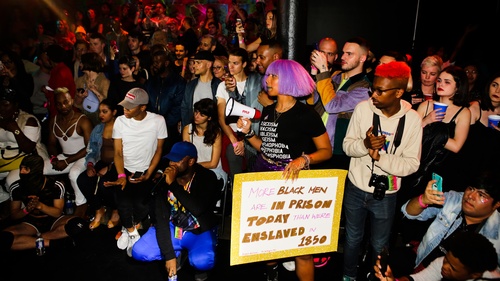
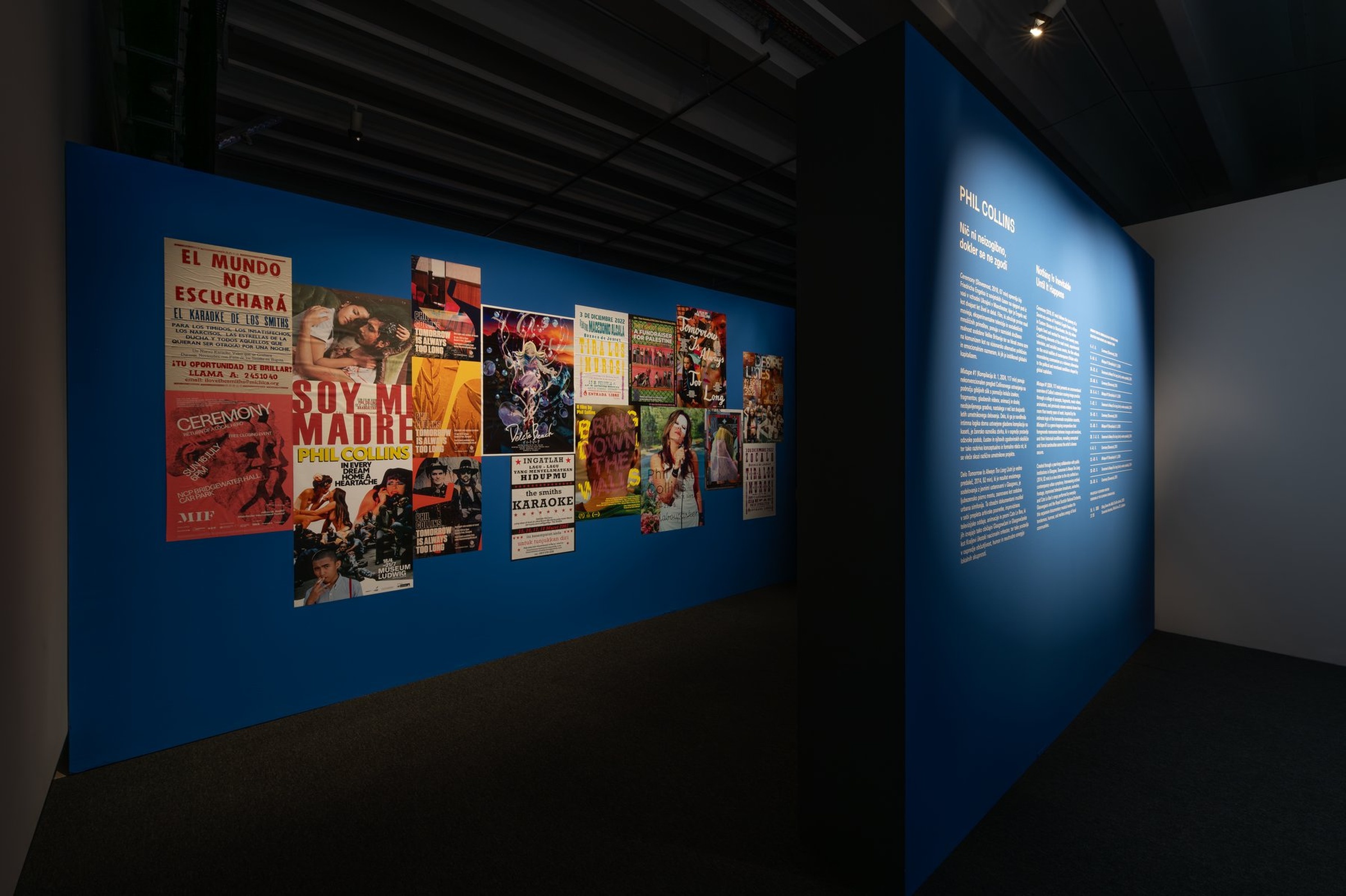
Mixtape #1 (2024, 117 min.) presents an unconventional overview of Collins’s extensive moving-image practice through a collage of excerpts, fragments, music videos, animations, and previously unseen material drawn from more than twenty years of work. Inspired by the intimate logic of the homemade compilation cassette, Mixtape #1 is a genre-hopping compendium that foregrounds resonances between images and emotions, and their historical conditions, revealing conceptual and formal continuities across the artist’s diverse projects.
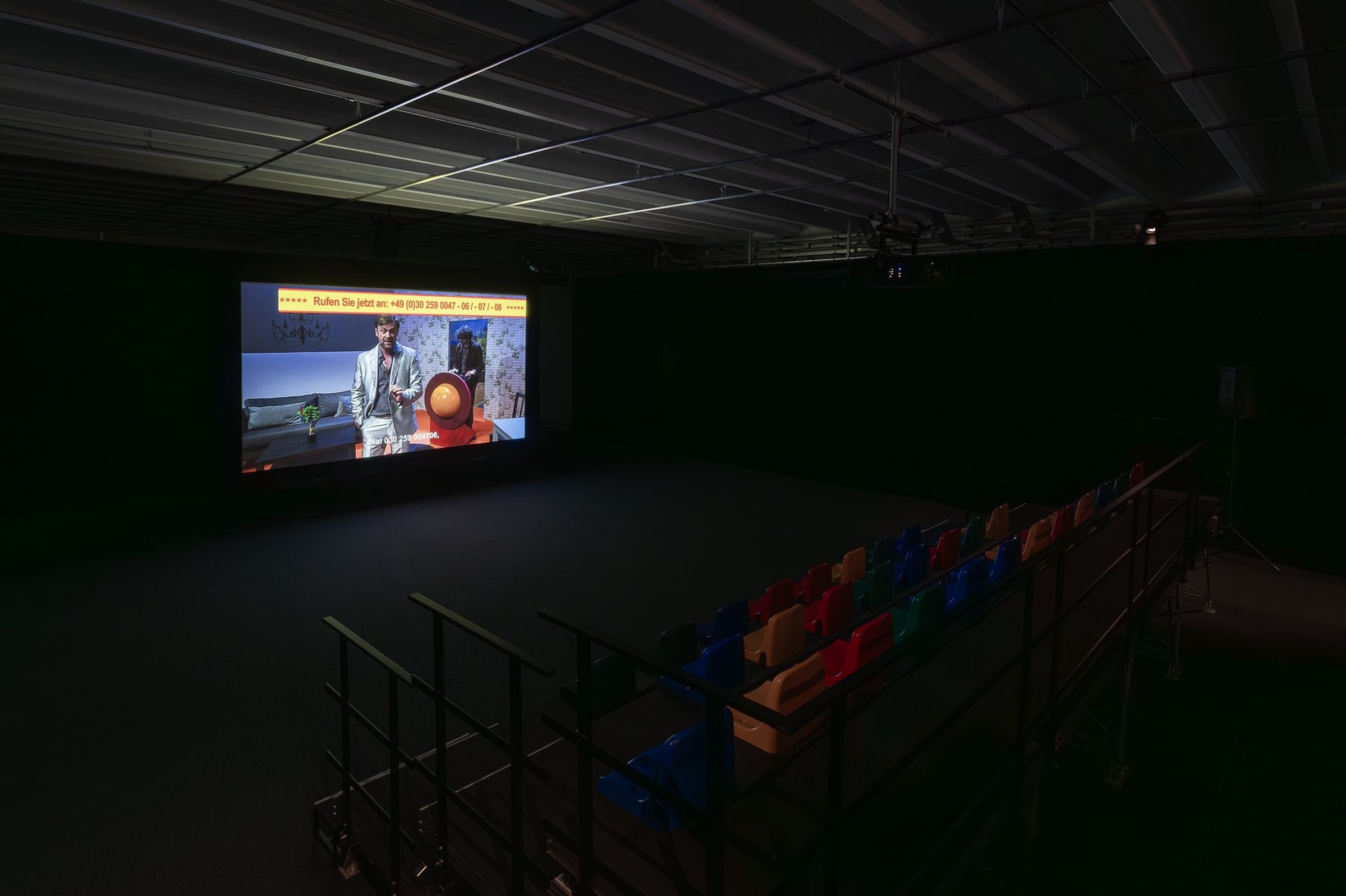
This heady blend includes moments from they shoot horses (2004), a disco-dance marathon in Ramallah, Palestine, filmed during the Second Intifada; it channel-surfs across two nights of teleshopping in This Unfortunate Thing Between Us (2011), first performed in Berlin and broadcast live on German public television; and it eavesdrops on karaoke enthusiasts in Bogotá, Istanbul, Jakarta and Bandung, singing The Smiths in the world won’t listen (2004-2007).
Elsewhere, excerpts of the melodrama soy mi madre (2008), filmed in Mexico, show Collins’ lush cinematic take on the popular form of the telenovela, while scenes from the long-term collaborative project Desire Lines (2022–ongoing) gesture towards decolonial, queer collectivity expressed through dance, dialogue and performance.
Marxist economic analysis articulated in use! value! exchange! (2010) is offset by quietly melancholic views of street life in Pyongyang. The futuristic world of Delete Beach (2016), a short anime scored by Mica Levi, is threaded through with testimonies about state violence in Mexico and a communal celebration of sonidero culture in Tira Los Muros (2022). Punctuated by music videos for artists such as Cate Le Bon and Parquet Courts, Mixtape #1 plays out as a richly layered constellation of encounters, histories and affects.
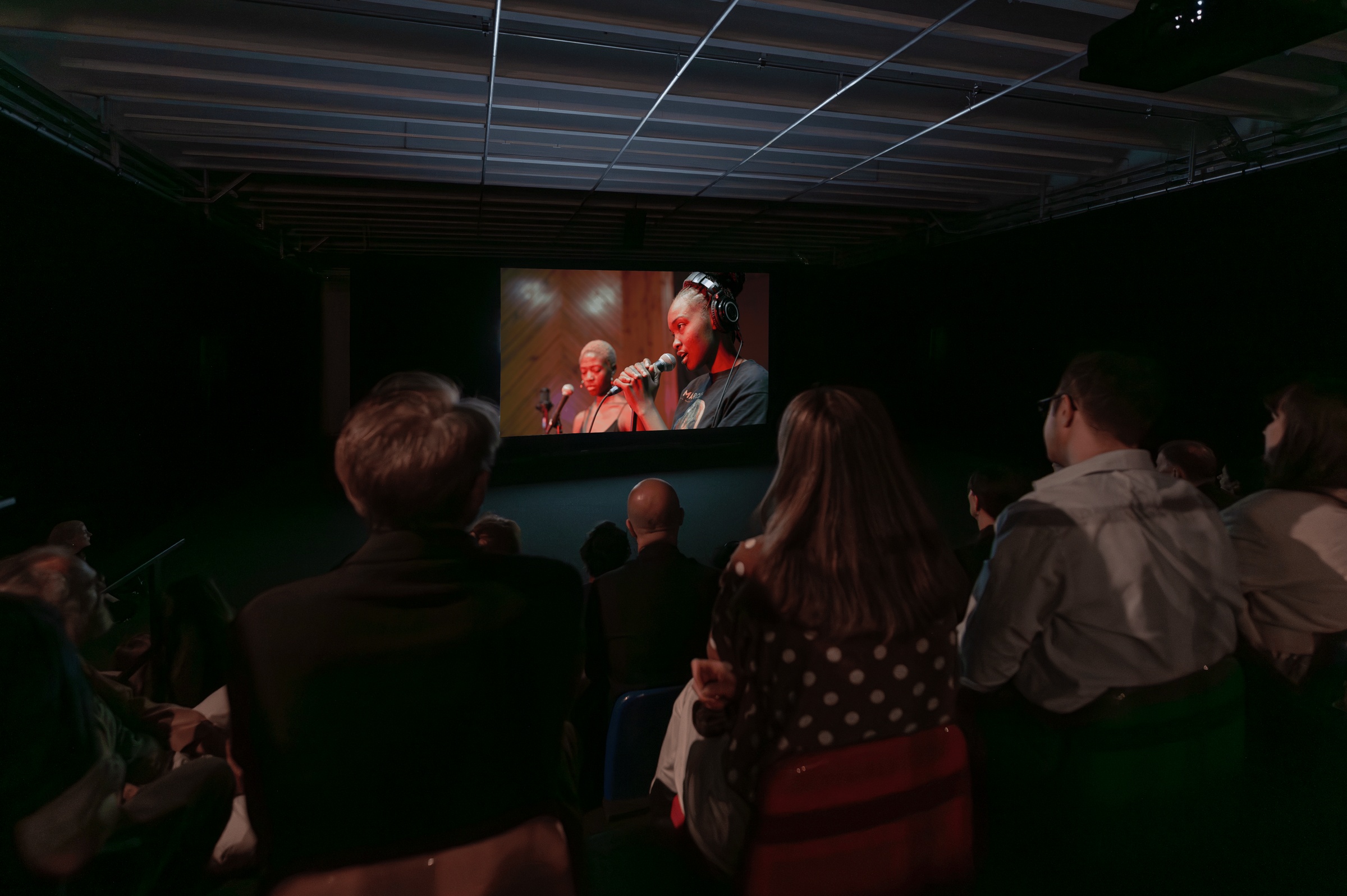
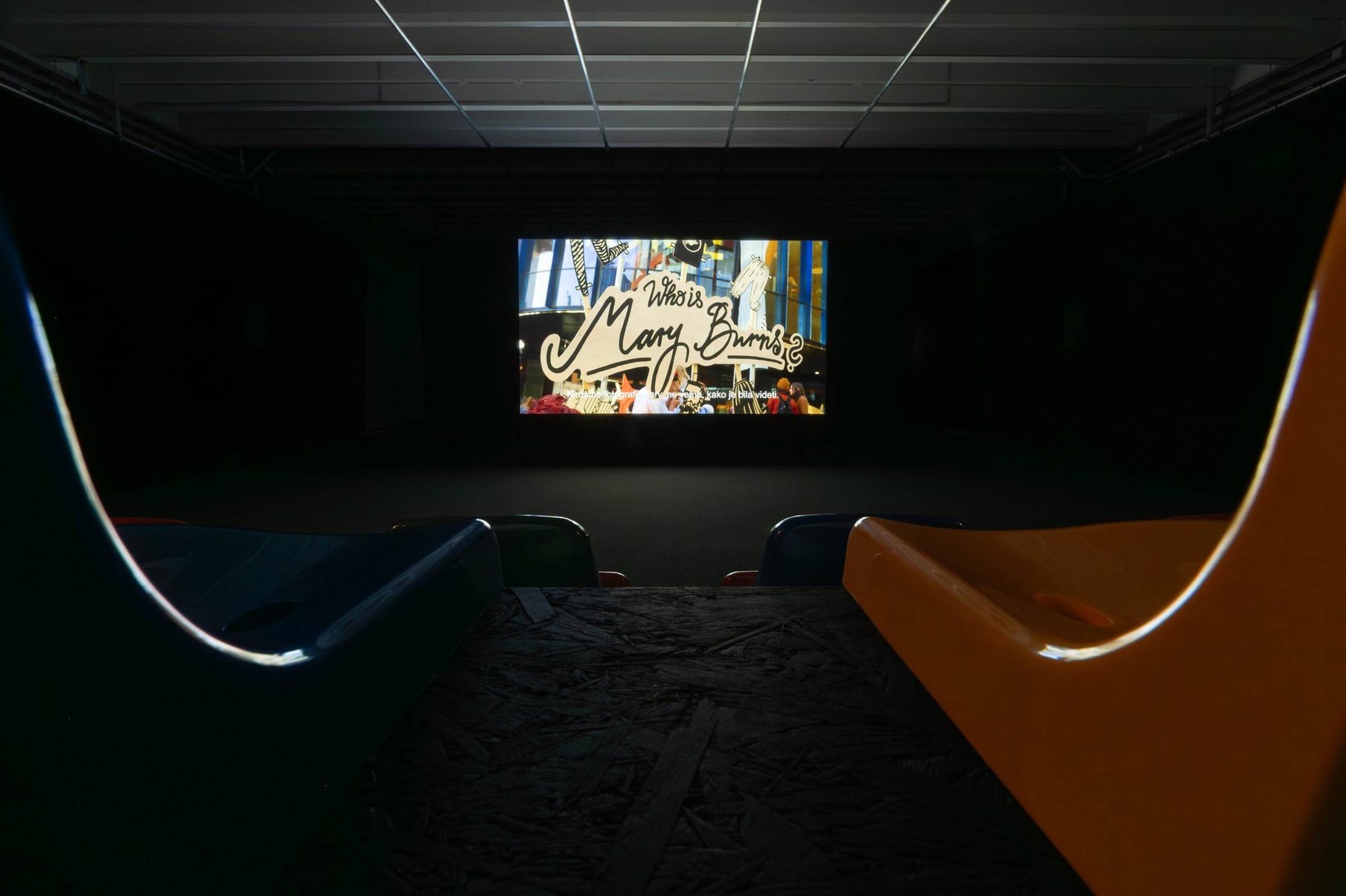
Created through a year-long collaboration with public institutions in Glasgow, Tomorrow Is Always Too Long (2014, 82 min.) is a love letter to the city crafted as an expansive documentary musical. The film is assembled from a number of interlocking parts. Archival footage glimpses the history of local working-class movements. A series of silhouette animations follow a group of characters on a night out against an electronic soundtrack by Mogwai's Barry Burns. Improvised broadcasts from a disused TV studio bring together people from all walks of life whom Collins encountered over the course of the project. Moving across a range of formats – from late-night talk shows to psychic readings and hotline adverts – they operate as a repository of the pre-digital public sphere.
Nestled between these improbable transmissions, everyday Glaswegians break into rapturous renditions of Cate Le Bon’s songs, accompanied by the Royal Scottish National Orchestra. Forming the film's emotional throughline, the musical sequences trace the arc of human life in technicolour hues, from birth and youth through education and the criminal justice system to old age. "For me, there's a transformative power in a pop song, an ability to tilt even the most mundane situation into the realm of the extraordinary and of heartbreak," says Collins. "It's a form of artifice in some ways more authentic than 'real' emotion."
Presented originally as a one-night-only screening in a public park on Glasgow's South Side, the site of Paul Robeson's May Day visit in 1960, Tomorrow Is Always Too Long riotously interweaves genres, moods and stylistic registers into a symphonic portrait of Scotland's largest city, celebrating the tenderness, humour and restless energy of its communities.
Curated by: Alenka Gregorič
Exhibition text: Alenka Gregorič; Exhibition production and coordination: Eva Bolha; Public relations: Mojca Podlesek; Production assistance: Neža Vengust; Design: Ajdin Bašić; Head of technical team: Jože Kalan; Technical team: Martin Lovšin, Žan Rantaša, Primož Vozelj.
We gratefully acknowledge Slovenian Cinematheque for the screening of the film Bring Down the Walls.
Opening hours
Tuesday to Sunday: 10.00–19.
24 and 31 December: 10.00–14.00
Closed: Mondays, 1 January, 1 November, 25 December
Tickets
Free entry.
Press kit
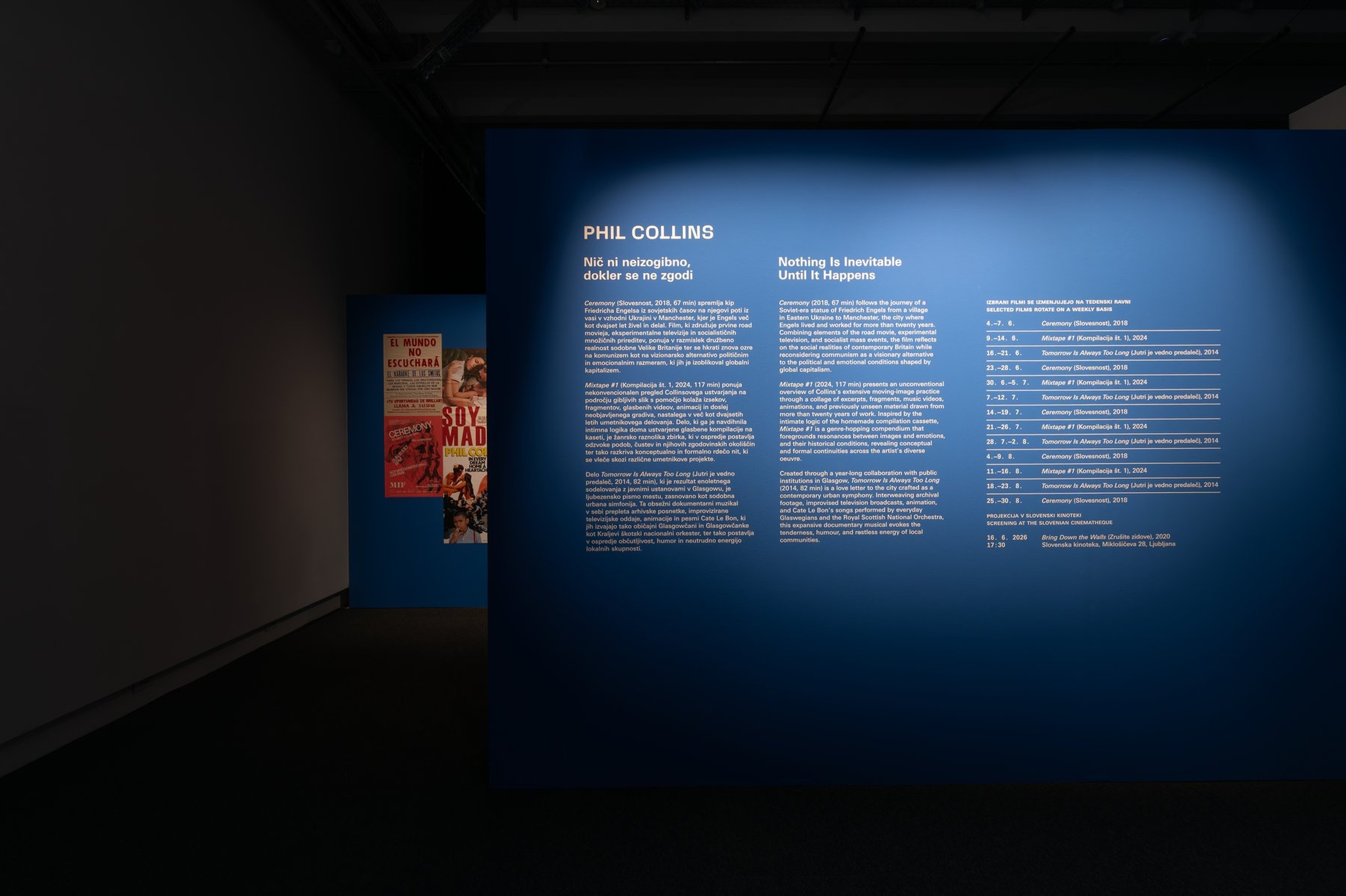
Selected films rotate on a weekly basis
4.–7. 6.
Ceremony (2018)
9.–14. 6.
Mixtape #1 (2024)
16.–21. 6.
Tomorrow Is Always Too Long (2014)
23.–28. 6.
Ceremony (2018)
30. 6.–5. 7.
Mixtape #1 (2024)
7.–12. 7.
Tomorrow Is Always Too Long (2014)
14.–19. 7.
Ceremony (2018)
21.–26. 7.
Mixtape #1 (2024)
28. 7.–2. 8.
Tomorrow Is Always Too Long (2014)
4.–9. 8.
Ceremony (2018)
11.–16. 8.
Mixtape #1 (2024)
18.–23. 8.
Tomorrow Is Always Too Long (2014)
25.–30. 8.
Ceremony (2018)